Notification of Karenia mikimotoi bloom; Paralytic and Diarrhetic Shellfish Toxin Events in the South and Southwest
Karenia mikimotoi bloom event – Southwest Coast
Updated 04-08-26
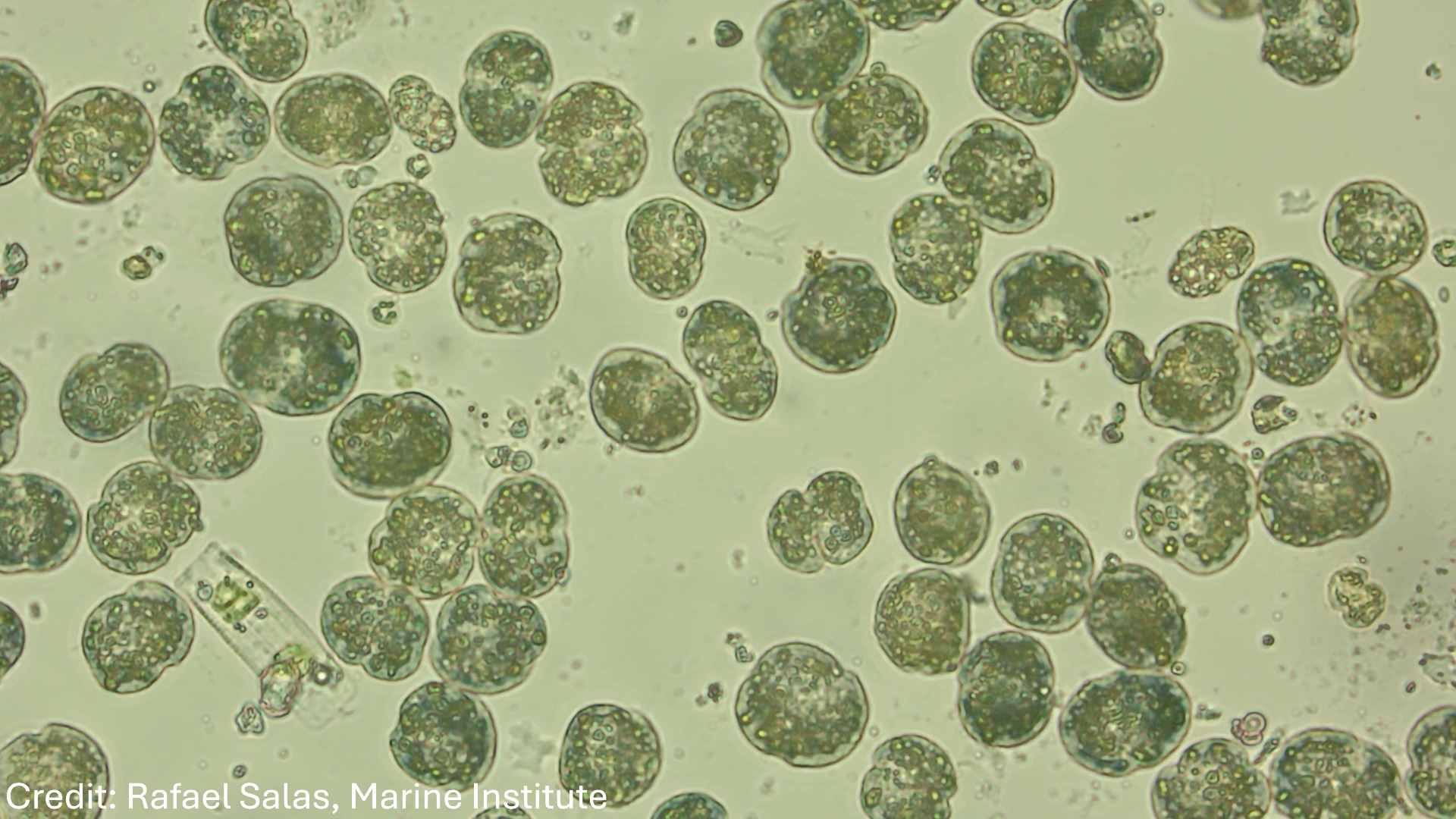
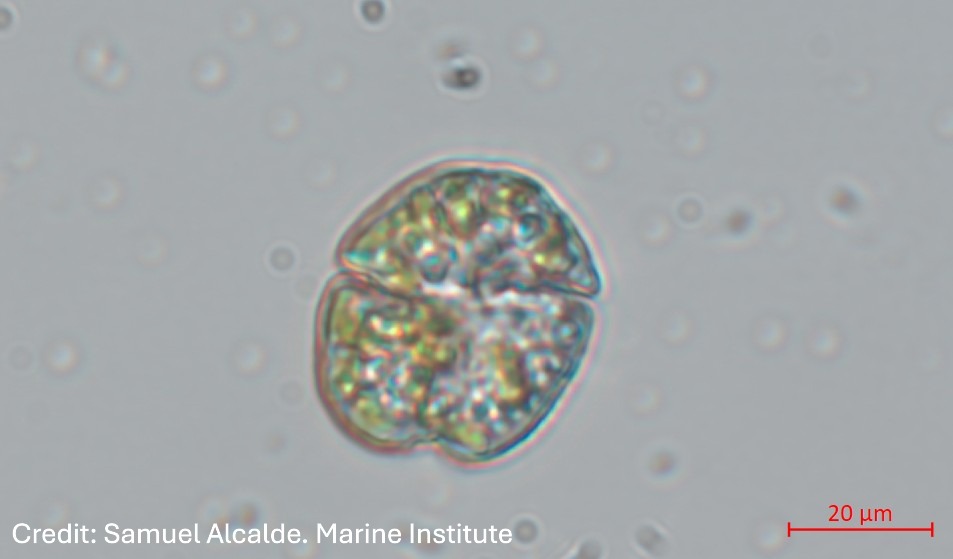
Please note moderate – high cell densities of the bloom forming dinoflagellate Karenia mikimotoi has been observed in multiple inshore locations along the Southwest (specifically Schull, Sherkin Island, Roaringwater Bay and Castletownbere over the last week. Please beware previous Karenia mikimotoi blooms in Ireland have also been associated with mortalities of marine organisms including flatfish, benthic invertebrates, as well as farmed shellfish and finfish. It is thought that these mortalities are as a result of depleted or low oxygen levels that can occur when the bloom begins to decay. Mortalities have been reported of urchins in Rossbeigh, and of lugworms along Ballyrisode beach. Over the last week brown seawater surface discolouration’s have been observed in Schull and Roaringwaterbay.
Please report any mortalities and seawater discolourations to HABS Team Marine Institute (habs@marine.ie)
Diarhettic Shellfish Toxin Event – South Coast
Updated 31-07-26
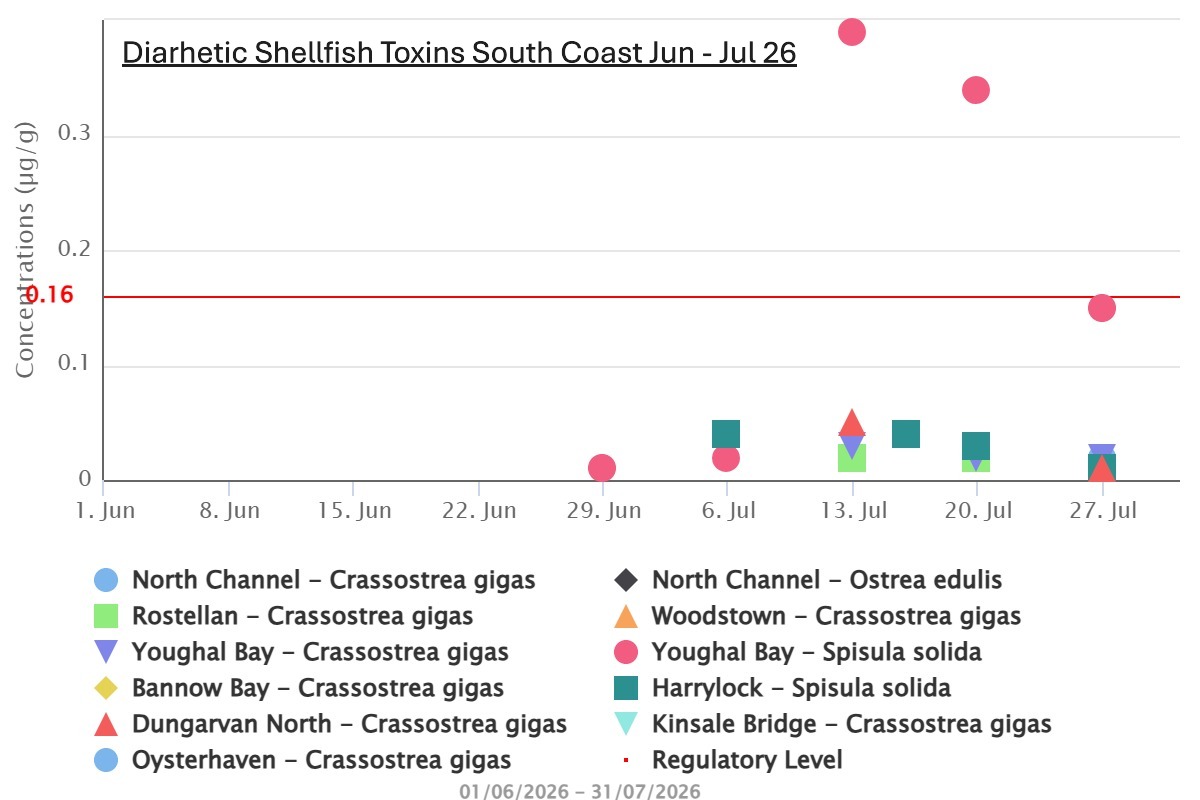
Please note quantifiable levels of Diarrhetic Shellfish Toxin (DST) detected in surf clams in Youghal Bay are below regulatory limits (0.16µg/g) this week (w/c 27th Jul) (DST concentration 0.15µg/g).
Quantifiable concentrations of DST’s concentrations have been observed in a number of production areas in both oysters and surf clams along the South Coast over the last weeks, however this has been observed to decrease over the last two weeks along the south coast.
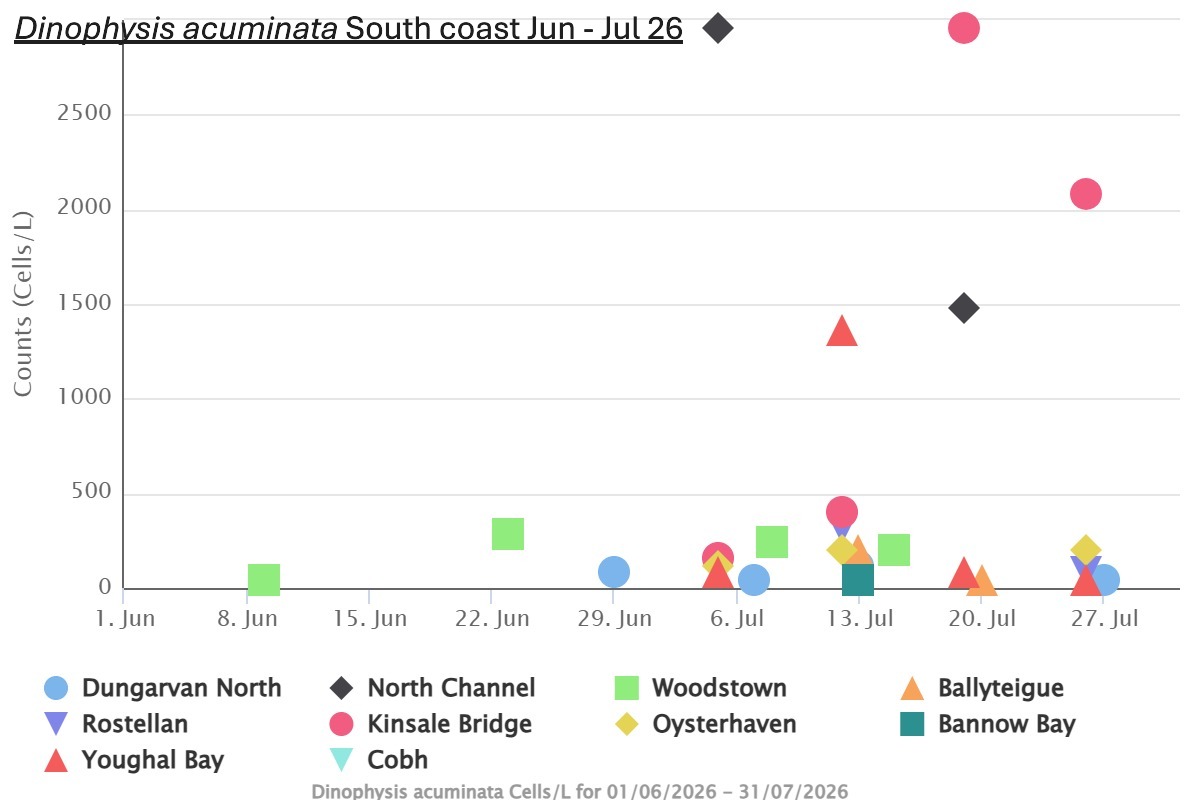
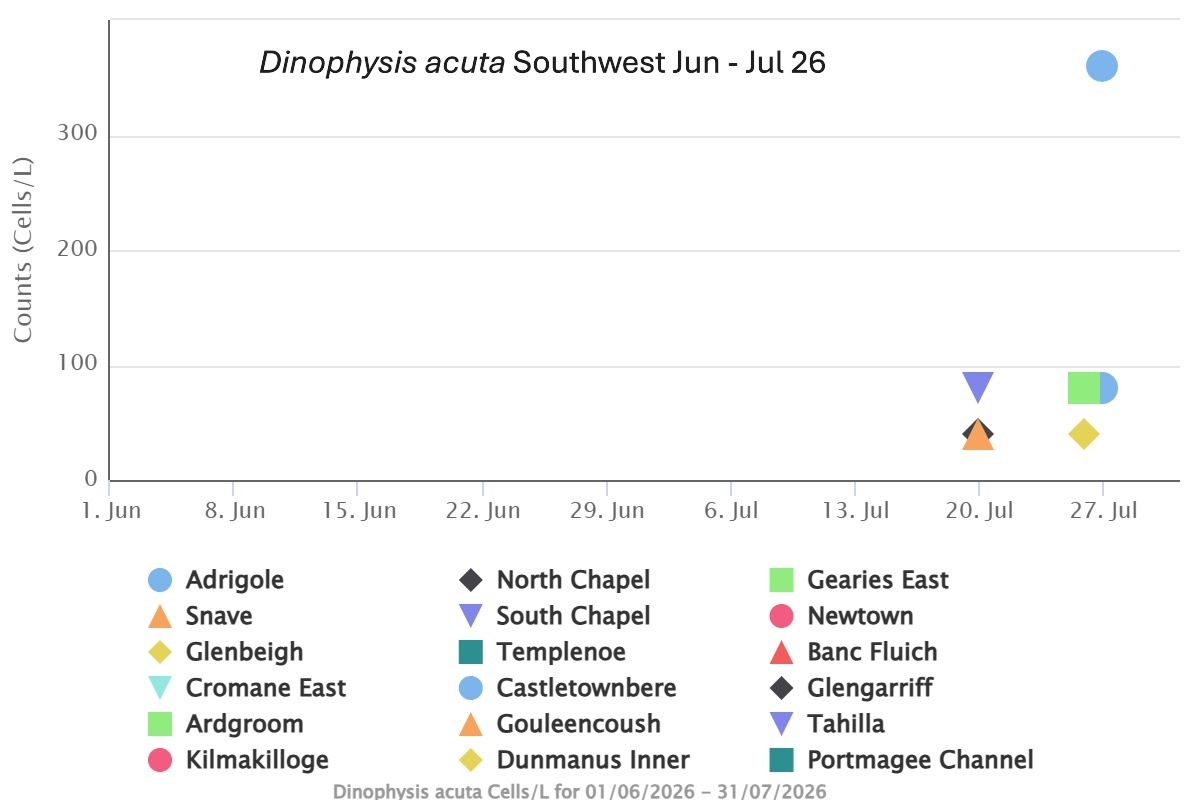
However the occurrence of the causative toxin producing phytoplankton species Dinophysis is still being observed in several locations this week.
Diarhettic Shellfish Toxin Event – Southwest Coast - Castlemaine Kenmare, Bantry, Dunmanus
Updated 31-07-26
Quantifiable concentrations of Diarrhetic Shellfish Toxin (DST’s) concentrations have been observed in a number of mussel and oyster sites in various production areas in Castlemaine, Kenmare, Bantry and Dunmanus bays, below the regulatory limit (0.16µg) during w/c 27th July 2026.
However the occurrence of the causative toxin producing phytoplankton species Dinophysis is still being observed in several locations this week, highlighting the occurrence of Dinophysis acuta in several locations along the southwest over the last two weeks.
.jpg?@DateTime.Now.Ticks)
.jpg?@DateTime.Now.Ticks)
Paralytic Shellfish Toxin Event - Castlemaine and Cork Harbour
Updated 31-07-26
Please note quantifiable levels of Paralytic Shellfish Toxins (PST) have been detected in mussels and oysters below regulatory levels (800µg STX diHCl-eq/kg) in Castlemaine Harbour, and also in oysters from Cork Harbour. Over the last two weeks there has been a decreasing trend in both locations of PST concentrations.
This is due to the decreasing cell densities of the causative toxin producing phytoplankton species Alexandrium in both Cork & Castlemaine Harbour areas.
.jpg?@DateTime.Now.Ticks)
.jpg?@DateTime.Now.Ticks)