Biotoxin & HAB Notification Alerts
• Diarrhetic Shellfish Toxin Event - Southeast Offshore Scallops
• Azaspiracid Shellfish Toxin Event - Southwest
• Declining Bloom of Noctiluca scintillans
Diarrhetic Shellfish Toxin Event – Offshore Southeast Coast
Updated 28-09-26
Please note that following previous notifications disseminated to industry and posted to the HABs website highlighting this, quantifiable levels of Diarrhetic Shellfish Toxin (DST) continue to be detected in whole tissues of king scallops (Pecten maximus) in non-classified offshore harvesting grounds of the Southeast coast since July 2026.
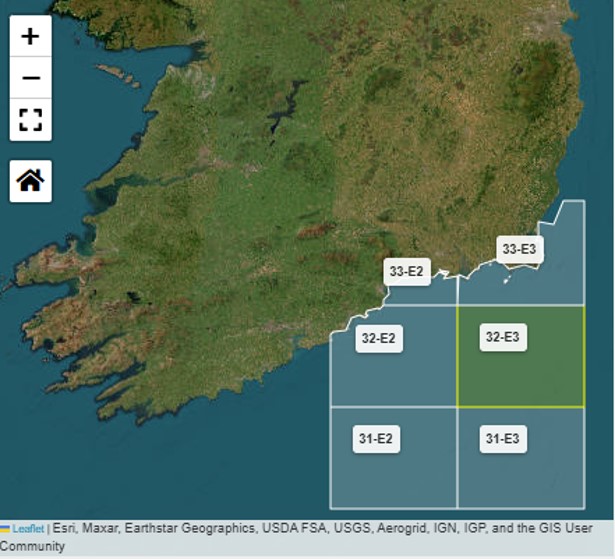
To date three ICES statistical rectangles, of the six in the broader scallop super area in the southeast, have exceeded the whole scallop screening limit (0.342 µg/g Okadaic acid equivalents) under the rules of the Code of Practice for the Irish Shellfish Monitoring Programme (Biotoxins), namely:
- On 28/08/2026 32,-E2 – 1.26 µg/g OA equivalents;
- On 15/09/2026 32-E3 – 1.63 µg/g OA equivalents;
- 16/09/2026 31-E3 – 0.37 µg/g OA equivalents.
- 22/09/2026 31-E3 – 1.05 µg/g OA equivalents.
As a result of this ongoing biotoxin event, the decision has been taken that fishing should be restricted in the above listed statistical rectangles from midnight September 22nd until further notice in order to safeguard food safety. Industry should refrain from sampling these areas for two weeks from midnight on September 22nd. During this period, biotoxin testing of scallops from these statistical rectangles will not be facilitated under the National Biotoxin Monitoring Programme.
With respect to the other three ICES statistical rectangles in this fishing super area (31-E2, 33-E2 and 33-E3), both whole and shucked samples are now required to be taken from each landing due to the potential risk in these areas indicated by the listed exceedances. Please note that shucked product from these remaining statistical rectangles in the super area can only be placed on the market following the publication of National Biotoxin Monitoring Programme results compliant with the whole body and shucked product levels dictated under the Code of Practice. The described steps are being taken by the competent authority in order to safeguard against risk of product going to market without appropriate control.
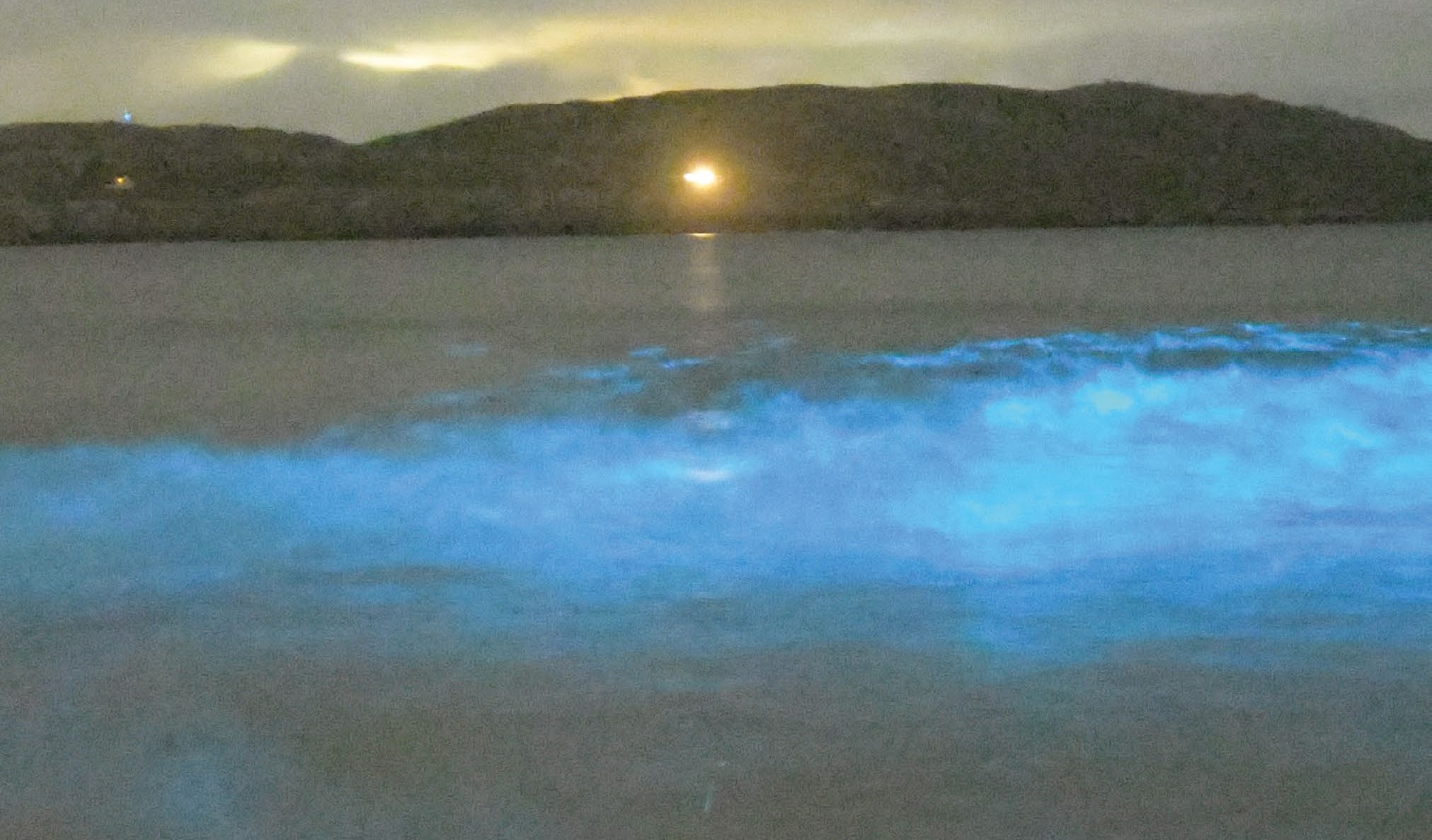
Noctiluca scintillans declining bloom event – Southwest Coast
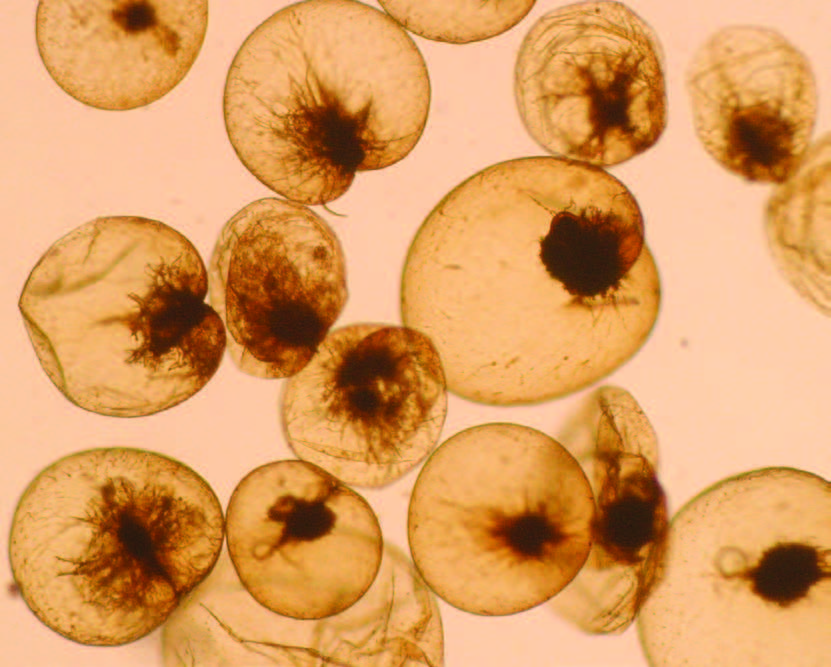
Please note cell densities of the bloom forming dinoflagellate Noctiluca scintillans have been observed to be present at low cell densities in multiple inshore locations in the Southwest (Bantry, Dunmanus) this week (w/c 12-10-26) in samples submitted for the Phytoplankton National Monitoring Program.
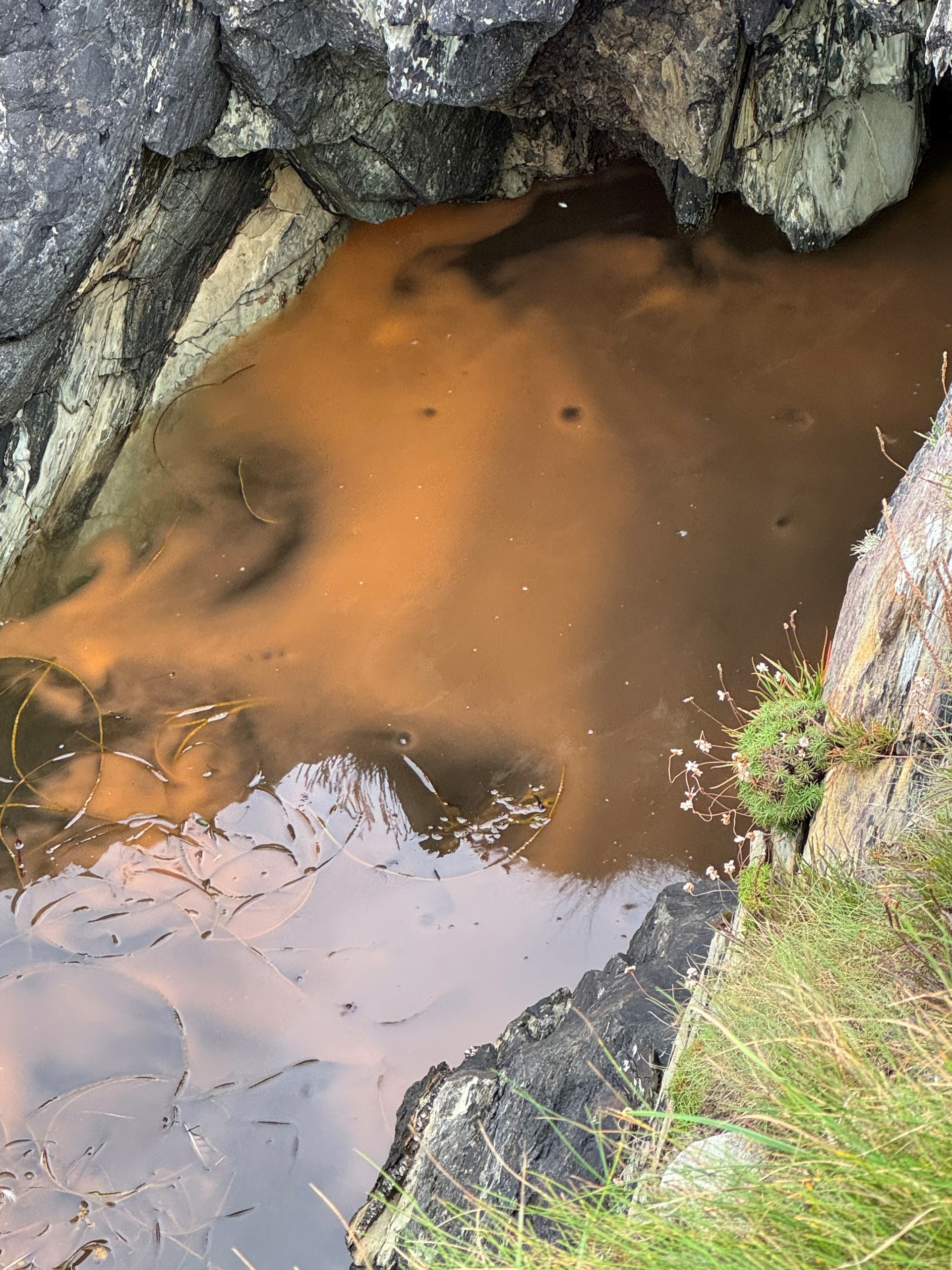
While this species is non-toxic, it may cause mortalities among marine organisms, particularly as the bloom decays and depletes oxygen in the water column. It may also cause an unpleasant smell as the bloom breaks down due to the release of ammonia.
It is a naturally occurring bloom which happens annually around the coast of Ireland along South and Southwest coasts, and historically has also been observed off western coasts.
Please report any mortalities and seawater discolouration’s to HABS Team Marine Institute (habs@marine.ie)
Azaspiracid Toxin Event – Southwest Coast - Castlemaine, Kenmare, Bantry.
Updated 15-10-26
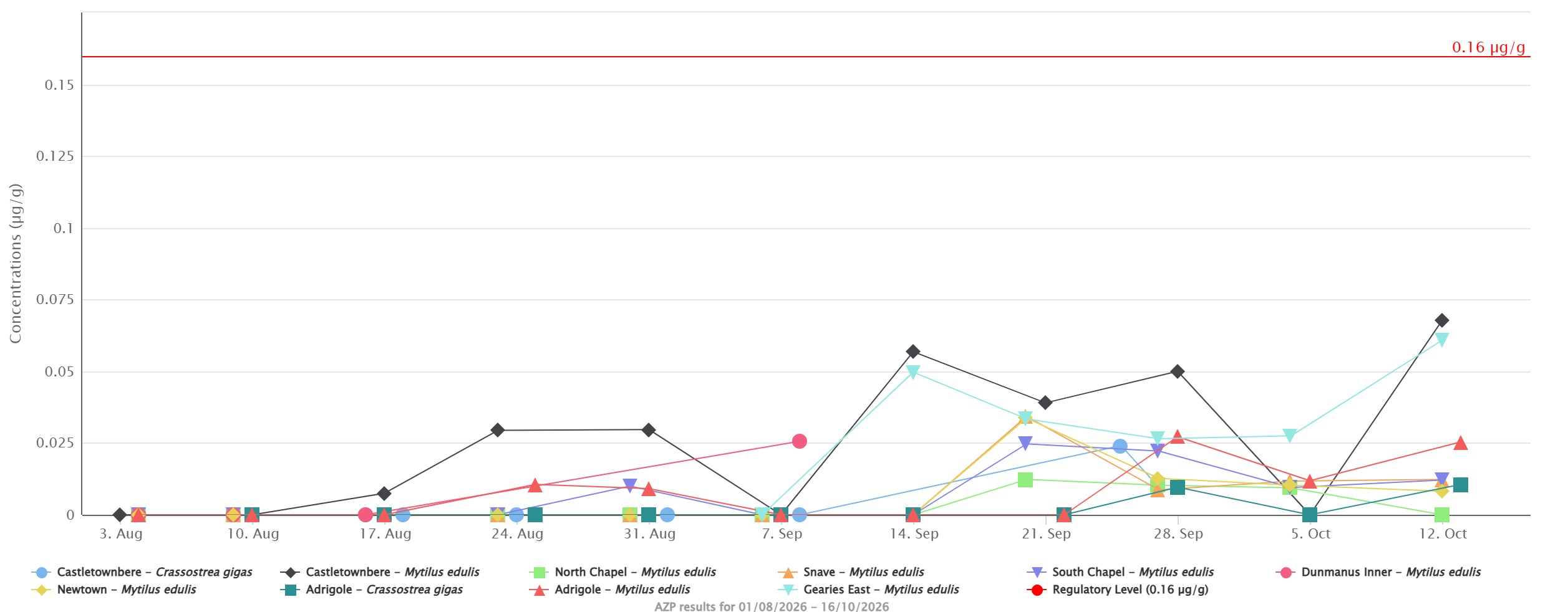
Low quantifiable concentrations of Azaspiracid Shellfish Toxin (AZA’s) concentrations have been observed in a number of mussel sites in various production areas in Bantry and Dunmanus since mid August through to the this week (w/c 15-10-26), all AZA concentrations are well below the regulatory limit (0.16µg/g). The causative species, Azadinium has been observed in the same areas within Bantry, Kenmare and Dunmanus since mid August.